


Can You Use Regular Stretch Film on an Automatic Wrapping Ma
Source:Can You Use Regular Stretch Film on an Automatic Wrapping MaTime:2026-08-04Visitors:
Using the wrong film on an automatic wrapper is a recipe for warehouse chaos. You might think "regular" hand film is a cost-effective substitute, but the resulting constant breaks and machine jams will quickly erode your productivity. Choosing the incorrect material doesn't just waste plastic; it compromises the safety of your entire shipment.
No, you should not use regular hand stretch film on an automatic wrapping machine. Hand film lacks the necessary tensile strength and pre-stretch capacity (200-300%) required by automated equipment. Using it will lead to frequent film breaks, machine downtime, and inconsistent load security during transit.
The transition from manual wrapping to automation is a major step for any logistics operation, but the machinery is only as good as the material fed into it. While hand film and machine film might look identical to the untrained eye, they are engineered for completely different physical stresses. Understanding these technical boundaries is the key to a smooth, high-speed packaging line.
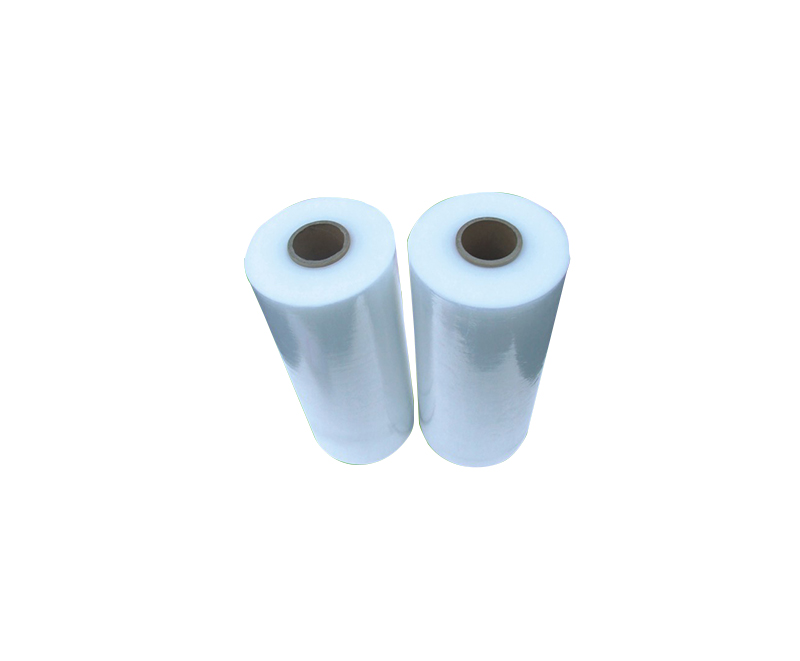
1. What are the Technical Differences Between Hand and Machine Film?
To understand why they aren't interchangeable, we must look at the molecular engineering of the plastic. Each type is designed to respond differently to tension and speed.
The primary differences are tensile strength and pre-stretch capability. Machine film is engineered to stretch up to 300% using mechanical rollers, whereas regular hand film is designed for manual application with much lower elasticity, making it unsuitable for the high-tension environment of automated wrappers.
1.1 Tensile Strength and Elongation
Machine stretch film is manufactured using advanced resins that allow for extreme elongation. When an automatic wrapper pulls the film, it uses a pre-stretch carriage to turn one foot of film into three feet. Dongguan Zhiteng Plastic Products Co., Ltd. specializes in PE stretch films that offer "excellent tensile force and high rebound force." This means the film doesn't just stretch; it wants to snap back, creating a tight "hug" around the pallet.
Regular hand film, by contrast, is designed for a human to pull. Since a person cannot exert the same consistent force as a motor-driven carriage, hand film is engineered to reach its limit much sooner. Theoretically, if you put hand film on a machine, it reaches its "breaking point" almost immediately because it cannot handle the 200%+ stretch ratios common in automation. Practically, this results in a film that thins out and snaps before it even touches the pallet.
1.2 Roll Size and Core Compatibility
Beyond the chemistry, the physical dimensions of the rolls are a major barrier. Machine rolls are significantly heavier and larger to minimize the need for frequent changes.
- Example 1: Standard Hand Roll: Typically weighs between 2kg and 5kg with a 2-inch or 3-inch core, designed for easy lifting by a worker.
- Example 2: Standard Machine Roll: Usually weighs 15kg to 18kg and requires a 3-inch heavy-duty core to withstand the torque of the machine's spindle.
2. What Happens if You Use Hand Film on a Machine?
Attempting to "make do" with hand film on an automated line usually results in immediate operational failure. The mechanical forces at play are simply too high for manual-grade materials.
Using hand film on a machine typically results in immediate failure. The high-speed pre-stretch carriage will snap the thinner, less elastic hand film instantly. This causes constant machine stoppages, wasted material, and potentially damages the machine's rollers due to film wrap-around or "bird-nesting."
2.1 Frequent Breakage and Downtime
The most immediate impact is the "snap." As the machine's rollers begin to spin, they apply a specific amount of torque to the film. Because hand film is not designed to be stretched mechanically, it will tear. Every time the film breaks, an operator must stop the line, re-thread the machine, and restart the cycle. This turns an "automatic" process into a labor-intensive nightmare.
From a multi-angle analysis, the design trade-off of using hand film is a massive loss in "throughput." Theoretically, automation should speed up your dock. Practically, using the wrong film makes it slower than manual wrapping. Zhiteng, with over 16 years of experience as a supplier to companies like Walmart and Foxconn, emphasizes that "quality and service are prioritized" to avoid exactly these kinds of efficiency-killing mistakes.
2.2 Poor Load Containment and Safety Risks
Even if you manage to get the hand film to stay in one piece by turning the machine's tension settings all the way down, the pallet will not be secure.
- Example 1: The "Loose" Pallet: Because the hand film isn't being stretched to its "memory" point, it won't exert enough containment force. During transit, the boxes will shift, leading to damaged goods.
- Example 2: The "Tail" Problem: Hand film often lacks the high-cling additives found in machine film. The end of the wrap (the tail) is likely to unravel, getting caught in warehouse conveyor belts or truck wheels.
Consequences of Using Hand Film on Machines:
- Increased Plastic Waste: You will use more layers of hand film to try and achieve the strength of one layer of machine film.
- Worker Frustration: Constant re-threading of the machine leads to employee burnout.
- Equipment Wear: The "snap-back" of breaking film can put unnecessary shock on the machine's motor and sensors.
3. How to Choose the Right Film for Your Machine?
Selecting the correct film is about matching the material's specifications to your machine's capabilities and your load's requirements.
To choose the right film, identify your machine's pre-stretch capability and your load weight. High-performance machine films from manufacturers like Zhiteng offer consistent thickness and high puncture resistance, ensuring that the film performs reliably under the specific mechanical stresses of your automated wrapping equipment.
3.1 Matching Pre-Stretch Ratios
Before buying film, check your machine's manual for its "Pre-Stretch Percentage." If your machine is a high-end model with a 300% pre-stretch carriage, you must buy a "High-Performance" or "Super-Stretch" film. If you use a standard film on a high-stretch machine, it will break. Conversely, using a 300% film on a machine that only stretches 150% is a waste of money, as you aren't utilizing the film's potential.
Zhiteng Plastic Products Co., Ltd. provides a variety of "machine stretch films" and "jumbo rolls" designed for different industrial needs. Their products are "moisture-proof and dust-proof," which is essential for long-term warehouse storage. By providing your machine's specs to their technical team, they can help you "manufacture the most suitable products," ensuring a perfect match between film and machine.
3.2 Cost-Benefit Analysis of Machine Film
While machine film rolls have a higher upfront cost per roll than hand film, the "cost per pallet" is significantly lower.
- Example 1: Material Savings: Because machine film stretches 3x its length, you use 60% less plastic per pallet than you would with hand film.
- Example 2: Labor Efficiency: A machine roll can wrap 30-50 pallets without needing a change, whereas a hand roll might only cover 10-15, requiring more frequent human intervention.
Practical Advice for Procurement:
- Request Samples: Zhiteng offers "free samples" (buyer pays shipping) so you can test the film on your specific machine before committing to a large order.
- Check the Gauge: Ensure the micron thickness (gauge) is appropriate for your load weight. Heavier loads require thicker, more puncture-resistant film.
- Verify Core Strength: Ensure the roll has a reinforced 3-inch core to prevent the roll from collapsing under machine tension.
4. Can Machine Stretch Film Improve Packaging Efficiency?
Switching from hand stretch film to machine stretch film is not only a material upgrade; it is an operational improvement that directly affects packaging speed, consistency, and overall warehouse efficiency.
Machine stretch film is specifically designed to work with automatic wrappers by providing stable tension control, higher elongation, and consistent wrapping force. Unlike manual wrapping, where the tightness depends on the worker's strength and experience, automated wrapping systems apply the same amount of force to every pallet, creating a more reliable packaging process.
4.1 Faster Wrapping Speed and Higher Throughput
One of the biggest advantages of machine stretch film is the ability to significantly increase pallet wrapping speed. Automatic wrapping machines can complete multiple pallet cycles per hour with minimal operator involvement.
For high-volume warehouses, distribution centers, and manufacturing facilities, this means:
- More pallets wrapped per shift
- Less manual labor required
- Reduced packaging bottlenecks during peak production periods
- Improved consistency across all shipments
A properly matched machine stretch film allows the equipment to operate at its designed speed without frequent interruptions caused by film failures.
4.2 More Consistent Load Stability
Load stability is critical for companies shipping products over long distances. A pallet that is wrapped too loosely may shift during transportation, while excessive wrapping wastes material and increases packaging costs.
Machine stretch film provides:
- Controlled containment force
- Uniform tension around the entire pallet
- Better resistance against vibration and impact
- Improved protection during warehouse handling and transportation
For industries such as food and beverage, electronics, automotive parts, and consumer goods, this consistency helps reduce product damage and customer complaints.
4.3 Lower Long-Term Packaging Costs
Although machine stretch film may appear more expensive than hand film initially, the total packaging cost is usually lower when calculated by pallet.
The cost savings come from:
- Higher stretch ratios that reduce film consumption
- Fewer film roll replacements
- Reduced labor requirements
- Less product damage caused by unstable loads
For companies running hundreds or thousands of pallets per day, even a small reduction in film usage per pallet can create significant annual savings.
5. What Factors Should You Consider Before Buying Machine Stretch Film?
Choosing machine stretch film is not simply about selecting the cheapest option. The right film must match your wrapping equipment, product characteristics, and transportation requirements.
Before placing a bulk order, consider the following factors.
5.1 Load Weight and Product Shape
Different pallet loads require different levels of film strength. Heavy, irregular, or sharp-edged products need films with higher puncture resistance and stronger holding force.
For example:
- Lightweight cartons may use thinner high-performance films
- Heavy industrial components require stronger films with higher tensile strength
- Irregular loads may need specialized films with better cling and tear resistance
Selecting the wrong thickness can either cause unnecessary material costs or increase the risk of pallet failure.
5.2 Machine Type and Wrapping Settings
Automatic wrappers vary significantly in their stretching mechanism and operating speed. Before purchasing machine stretch film, confirm:
- Machine brand and model
- Pre-stretch ratio
- Wrapping speed
- Film width requirements
- Maximum roll dimensions supported
A film supplier with technical experience can recommend the correct film structure based on these parameters.
5.3 Film Quality and Supplier Capability
Not all stretch films provide the same performance. Low-quality films may have inconsistent thickness, poor elongation, or weak cling properties, causing problems during automated wrapping.
A reliable machine stretch film supplier should provide:
- Stable raw material quality
- Consistent micron thickness
- Customized film specifications
- Technical support for machine compatibility
- Sample testing before mass production
Dongguan Zhiteng Plastic Products Co., Ltd. provides customized machine stretch film solutions for different automatic wrapping systems, helping customers improve packaging efficiency while reducing material waste.
Conclusion
While it may be tempting to use "regular" hand stretch film on an automatic machine in a pinch, the technical and economic realities make it a poor decision. Machine stretch film is a specialized industrial product engineered to withstand forces that hand film simply cannot. By using the correct machine-grade film from a trusted manufacturer like Dongguan Zhiteng Plastic Products Co., Ltd., you ensure maximum load security, minimal waste, and a truly automated, efficient packaging process. Investing in the right material is the only way to protect both your products and your bottom line.
Recommended Products



Ranked in the same article
- how to use the stretch film technology to r
- How can we get detailed price list?
- Gauge to Micron and Millimetre Conversion G
- Five common quality problems of PE protecti
- Plastic film degradation
- How to guarantee punctual shipment for our
- What is the difference between stretch film
- Testing the permeability of stretch film
- Stretch film temperature requirements
- 2025 Guangzhou Packaging Expo Opens, Zhiten
- Electrical wire film VS electrostatic film
Latest news articles
- What effects can different colours of Color
- Unraveling the Science: What Factors Influe
- What is Bundling Stretch Film? Your Packagi
- The Ultimate Guide to Hand Stretch Film: Ev
- Our services
- What Role Does Material Science Play in Enh
- how to use the stretch film technology to r
- How to identify high quality flexible stret
- Bundling Stretch Film: The Ultimate Guide f
- SWOP - SHANGHAI WORLD OF PACKAGING 2019
- Why does stretch film wrinkle when it is us


