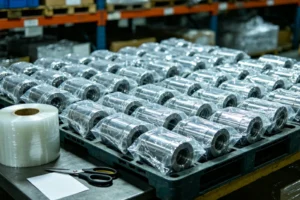
Choosing a stretch film supplier is less about the price on a quote and more about whether the film will run cleanly on your machine, week after week. A reliable supplier proves three things before you place a repeat order: they control production, they hold thickness and roll quality to a stated tolerance, and they answer technical questions fast when a line stops. This guide gives you nine checks to verify all three.
We wrote it from the factory side. ZT Packaging has produced stretch film in Dongguan, China since 2001, casting film on 20 in-house lines with an annual capacity above 60,000 tons. The checks below are the same questions we would ask a supplier if we were buying. Related decisions are covered in our hub page on machine stretch film.
Contents
- 1. Why the Supplier Matters More Than the Quote
- 2. Check 1: Confirm There Is a Real Factory
- 3. Check 2: Verify Resin Origin and Film Construction
- 4. Check 3: Demand a Written Thickness Tolerance
- 5. Check 4: Inspect Roll Geometry and Rewinding
- 6. Check 5: Match Stretch Behaviour to Your Machine
- 7. Check 6: Ask About Certifications by Grade, Not by Company
- 8. Check 7: Test Technical Support Before You Need It
- 9. Check 8: Read MOQ, Lead Time and Price Terms Carefully
- 10. Check 9: Run a Small Trial Before a Container
- 11. Vet Before You Commit: A Worked Example
- 12. A Copy-and-Paste RFQ Template
- 13. A Nine-Point Supplier Scorecard
- 14. Get a Free Quote and Sample Rolls from ZT Packaging
1. Why the Supplier Matters More Than the Quote
Two rolls can show the same number on a quote and behave very differently on a wrapper. Film that is a few microns off, wound with uneven tension, or made from a lower-grade resin will break, neck down, or fail to hold a load during transport. Those failures cost far more than the few cents per kilogram you saved.
This is why a machine film supplier should be judged on manufacturing control, not on catalogue looks. If you are still deciding how many layers you need or whether cast or blown film suits your load, read our comparison of cast vs blown machine stretch film first. The nine checks below apply whichever construction you choose.
2. Check 1: Confirm There Is a Real Factory
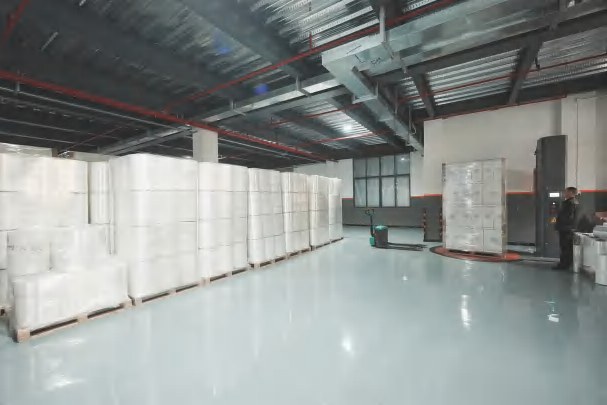
The single most useful question is whether the company casts its own film or buys it in. A trading company can quote well but cannot change your thickness, resin, or core on short notice. Ask for three things: the factory address, the number of extrusion lines, and a recent batch number with its certificate of analysis (COA).
A factory will answer all three directly. ZT Packaging, for example, works from a 40,000 m² plant in Dongguan with 20–25 cast lines and 60 rewinders, and can tie any roll back to a production batch. Cross-check the address on a map and ask to see a line photo with a date. If the answers stay vague, treat the supplier as a reseller and price accordingly. Our guide to how to shortlist machine film manufacturers goes deeper on building a supplier list.
3. Check 2: Verify Resin Origin and Film Construction
Stretch film is mostly LLDPE (linear low-density polyethylene, a strong, transparent plastic resin). What separates a good film from a cheap one is whether the resin is virgin, where it comes from, and how many layers are co-extruded. Ask which supplier makes the resin and whether metallocene grades are used for high-performance film. A supplier making a performance claim should be able to back it with tensile data — elongation at break and tensile strength measured under ASTM D882, the standard test method for tensile properties of thin plastic sheeting — rather than a marketing sheet.
We use 100% virgin LLDPE, including resin from ExxonMobil and Dow Chemical, and metallocene material in our higher grades. More layers generally mean better cling and puncture balance — typical machine film runs 3, 5, or 7 layers. If a supplier will not name the resin source, assume recycled or blended content and adjust your expectations on stretch and clarity.
4. Check 3: Demand a Written Thickness Tolerance
Thickness, or gauge, drives both cost and strength. A film ordered at 20 micron but delivered at 18 micron will save the supplier money and cost you load failures. Ask for the tolerance in writing on the quote, not just the target micron — and ask how it is measured. ISO 4593 is the international standard for determining plastic film thickness by mechanical scanning; a supplier who can name the method and the sampling points is easier to audit than one who only quotes a number.
ZT Packaging holds thickness to ±5%, and our cast lines use automatic die control to keep it steady across the roll and from roll to roll. For context, our machine film spans 10–80 micron, with common working ranges of 15–20 micron for light loads, 20–23 micron for mixed pallets, and 25–30 micron for heavy or sharp-edged goods. A supplier who cannot state a tolerance is telling you they cannot guarantee consistency. How gauge interacts with pre-stretch is explained in our article on pre-stretched vs conventional machine film.
5. Check 4: Inspect Roll Geometry and Rewinding
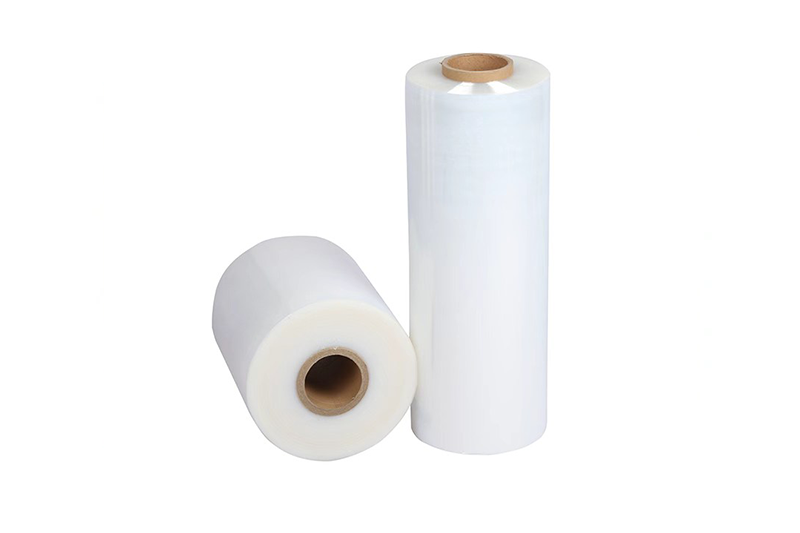
Machine film fails on the wrapper as often from bad winding as from bad film. Two faults to ask about are telescoping (layers sliding sideways into a cone) and core collapse (the paper tube crushing under tension). Both cause feeding problems and sudden stops.
Rewinding tension and roll geometry are controlled by the rewinders, so this is another reason to confirm the supplier owns them. We run 60 precision rewinders and check every roll for edge alignment and core integrity before packing. Ask a supplier for a photo of a cut roll end and a stack of finished rolls — a clean, even face is a good sign. Machine cores are usually 76 mm, while jumbo rolls use 152 mm; our jumbo roll buyer’s guide explains the difference in detail.
6. Check 5: Match Stretch Behaviour to Your Machine
Not every film suits every machine. A powered pre-stretch carriage can handle high-stretch grades (see our pre-stretch film range), stretching film 150–300%, while a brake-based or manual carriage works better with a more forgiving grade. Ask the supplier which grades they recommend for your specific wrapper model and pre-stretch setting.
A good supplier will ask you about carriage type, load weight, and transport mode before recommending a grade — not just ship the thickest roll. If your loads are unusually hot, cold, or need to breathe, the answer may be a special film; see our guide on perforated vs standard stretch film. Matching film to machine is the fastest way to cut film use per pallet without losing containment.
7. Check 6: Ask About Certifications by Grade, Not by Company
Certificates are easy to print and easy to overstate. The useful question is whether the certification covers the exact grade you are buying. Ask for the certificate, its scope, and the issue date — and check that the product name matches your film.
ZT Packaging holds ISO 9001, REACH, RoHS, CE, SGS, GRS, and BSCI, and we export to more than 30 countries, so our documents are routinely checked by overseas buyers. If you need food-contact or anti-corrosion film, the documentation requirement is stricter — our guide to choosing VCI stretch film for metal pallets shows which files to request. Treat a supplier who sends a single logo instead of a scoped certificate with caution.
8. Check 7: Test Technical Support Before You Need It
The real test of support happens when a line stops at 2 a.m. Before ordering, send a technical question and time the reply. Ask something specific, such as what pre-stretch range they recommend for a 1,100 kg pallet with cartons on a rotated load.
A supplier with in-house engineers will answer with a question or a grade recommendation, not a sales brochure. ZT Packaging promises an engineer reply within 24 hours, and our sales and technical staff work in English every day. Slow or generic answers before the order are a reliable preview of support after it. If you want to understand the cost side of a line stoppage, our article on film cost per pallet explains how breaks and rewraps are counted.
9. Check 8: Read MOQ, Lead Time and Price Terms Carefully
Commercial terms reveal how flexible a supplier really is. Clarify the minimum order quantity (MOQ), whether the price is per kilogram or per roll, what is included in the packing, and the current lead time. Hidden differences here can erase a headline saving.
ZT Packaging accepts an MOQ of one pallet, quotes by net weight, and typically ships standard grades in 15–20 days; custom colours or printing take longer. Ask for both net and gross weight so you can calculate landed cost honestly. A supplier who quotes only a low per-roll price without stating micron and net weight is not giving you a comparable offer.
10. Check 9: Run a Small Trial Before a Container
The final check is the cheapest insurance: run a trial roll on your own machine before committing to a full container. Track three simple numbers — breaks per shift, grams of film per pallet, and whether the load shifted after transport. A supplier confident in their film will encourage this.
We regularly send sample rolls matched to a customer’s wrapper model and load so the trial reflects real conditions. If a supplier refuses a trial or pressures you to skip straight to a large order, that is a clear signal. Use the scorecard below to record what you find and compare suppliers on equal terms.
11. Vet Before You Commit: A Worked Example
Here is how these checks play out in a typical first-order decision.
Challenge. A mid-size industrial equipment exporter in Northern Europe was preparing to ship palletised parts to the US and received two quotes that looked almost identical. One supplier offered a lower price per roll but would not state a thickness tolerance or name the resin source.
Spec chosen. The buyer ran checks 1, 3, and 9 first: the factory address and line count, a written ±5% tolerance, and a trial roll. The cheaper supplier could not provide the tolerance or a batch COA. The other supplier sent both, along with a 20 micron trial roll matched to the buyer’s powered pre-stretch carriage.
Result. In the trial, the documented film ran with only occasional breaks and held film use broadly flat against the buyer’s existing roll. The quoted saving from the cheaper supplier disappeared once a stated tolerance and trial support were included. No dramatic improvement was claimed — the gain was predictability.
Takeaway. A lower headline price is not a saving until you can verify tolerance, resin, and trial support. These checks turn two look-alike quotes into a decision you can defend internally.
12. A Copy-and-Paste RFQ Template
Send the same request to every candidate so the replies are comparable. Fill in the brackets:
- Product: machine stretch film, [cast / blown], [number] of layers.
- Thickness: [micron] with a stated tolerance (for example ±5%).
- Width and length: [500] mm x [metres] m; core [76] mm.
- Resin: 100% virgin LLDPE; source [ask them to specify]; metallocene [yes/no].
- Wrapper model and carriage type: [model], [powered pre-stretch / brake / rotary arm].
- Load: [weight] kg, [cartons / metal edges / wooden pallet], transport [sea / road].
- Quantity: [number] pallets, trial roll first [yes].
- Quote required: price per kg, net and gross roll weight, MOQ, lead time, Incoterm, certification with scope.
A supplier that answers all eight points is already ahead of one that returns only a price. This request also sets up the cost comparison described in our pallet wrapping solutions overview.
13. A Nine-Point Supplier Scorecard
Score each supplier from 1 (poor) to 3 (strong) and weight the result to your priorities. For most buyers, manufacturing control and consistency matter more than the headline price.
| Check | What to verify | Weight |
|---|---|---|
| 1. Real factory | Address, line count, batch COA | High |
| 2. Resin & layers | Virgin LLDPE, named source, 3/5/7 layers | High |
| 3. Thickness | Written tolerance such as ±5% | High |
| 4. Roll quality | No telescoping or core collapse, even edge | High |
| 5. Stretch match | Grade matched to carriage and pre-stretch | Medium |
| 6. Certificates | Scoped to the exact grade, current | Medium |
| 7. Support | Engineer reply speed and quality | Medium |
| 8. Terms | MOQ, net weight, lead time, price basis | Medium |
| 9. Trial | Sample roll run on your machine | High |
14. Get a Free Quote and Sample Rolls from ZT Packaging
If you want a supplier you can put through these nine checks, talk to us. ZT Packaging casts machine film on 20 in-house lines in Dongguan, holds thickness to ±5%, uses virgin LLDPE from named sources, and answers technical questions within 24 hours. Send your wrapper model, load weight, and target micron and we will quote a net-weight price and arrange a matched sample roll — MOQ is one pallet.
Email zt@dgztpacking.com or call +86-0769-87897718 to request a quote and free sample.
Frequently Asked Questions
How do I know if a stretch film supplier is a factory or a trader?
Ask for the factory address, the number of extrusion lines, and a recent batch number with a certificate of analysis. A factory answers all three and can tie a roll to a production batch; a trader usually cannot.
What thickness tolerance should I ask for in machine film?
Ask for a written tolerance, and ±5% is a reasonable benchmark for cast machine film. Without a stated tolerance, a roll ordered at 20 micron may arrive thinner and fail earlier than expected.
Why does resin source matter for stretch film?
Virgin LLDPE from a named supplier gives predictable stretch and clarity. Recycled or blended resin can lower the price but usually reduces stretch performance and consistency, especially in thin high-pre-stretch grades.
Should I run a trial before ordering a full container?
Yes. Run a trial roll on your own wrapper and record breaks per shift, grams of film per pallet, and whether loads shifted in transit. A supplier confident in their film will encourage the test.
What should a comparable machine film quote include?
Thickness with tolerance, width and length, core size, resin type, net and gross roll weight, MOQ, lead time, Incoterm, and certification with scope. Without these, two quotes cannot be compared fairly.