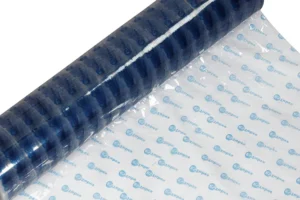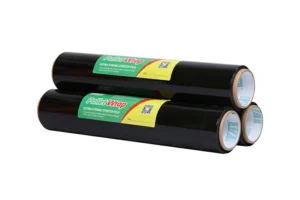
Black stretch wrap is stretch film pigmented with carbon black so the wrapped load cannot be seen through, and it is the most common security film in any warehouse. Coloured stretch wrap film works the same way with other pigments, but its job is usually different: instead of hiding the load, the colour identifies it. One roll of black film protects a shipment from prying eyes; one roll of coloured film tells a whole team where that pallet is going.
This guide explains when to use black stretch wrap, when colour coding earns its place, and how pigment interacts with the film’s stretch and puncture performance. All of it comes from film we cast at ZT Packaging in Dongguan, where colour is added in the same cast line rather than coated on afterwards.
Contents
- 1. What Is Black Stretch Wrap?
- 2. Why Black Film Is Used for Security
- 3. Coloured Stretch Wrap Film for Branding
- 4. Colour Coding in the Warehouse
- 5. Colour Options and Specifications
- 6. How Colour Affects Performance
1. What Is Black Stretch Wrap?
Black stretch wrap is standard LLDPE film with a black masterbatch added during extrusion, so the opacity runs through the film rather than sitting on the surface. That matters because the film still stretches and clings like clear film; the pigment does not turn it into a different material. The result is an opaque wrap that keeps cartons, branding and product details out of sight while holding the load exactly as clear film would.
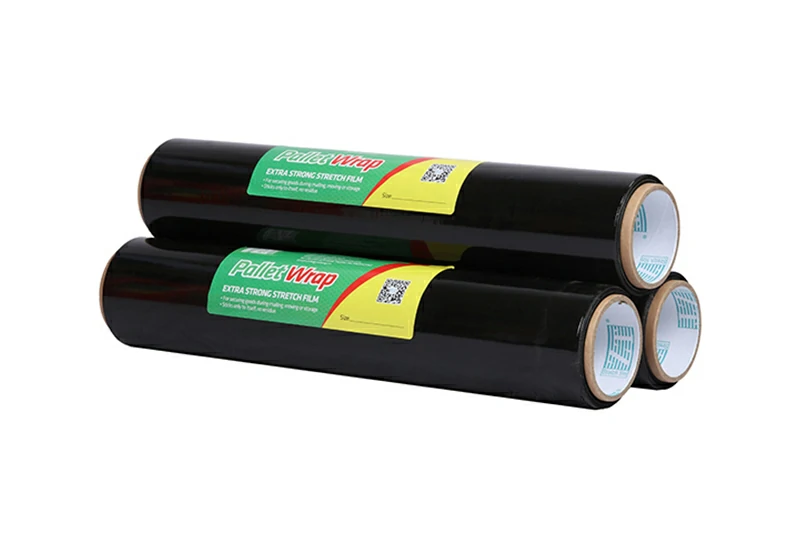
It is supplied in the same formats as clear film: hand rolls for manual wrapping and machine rolls for powered lines, in the widths and cores described in our guide on hand stretch film thickness. The choice between black and clear is about the job, not the equipment.
Because the pigment is added at the casting stage, black and coloured film are made on the same lines as clear film, an approach explained in our article on sourcing hand stretch film from a China manufacturer.
2. Why Black Film Is Used for Security
The main reason to specify black stretch wrap is concealment. A clear-wrapped pallet advertises its contents to anyone walking past; a black-wrapped pallet shows only a black block, which discourages opportunistic theft and keeps high-value electronics, branded goods and private-label cartons unreadable in transit and in storage.
Concealment also protects information rather than goods. When a pallet holds a competitor’s product, a customer list or an unreleased design, the packaging should not disclose it in a shared warehouse. In these cases black film works alongside tamper evidence: any break in the wrap is obvious because the layer underneath is dark and uniform, and the methods for a tight, even wrap are set out in our guide on how to wrap a pallet by hand.
3. Coloured Stretch Wrap Film for Branding
Where black film hides, coloured stretch wrap film communicates. A brand colour on every pallet turns a plain wrap into a moving billboard, and it is often the cheapest branding a manufacturer applies, because the film is bought anyway. Colour is added in the same cast process as black, so a red, blue or green film keeps the stretch and cling of clear film.
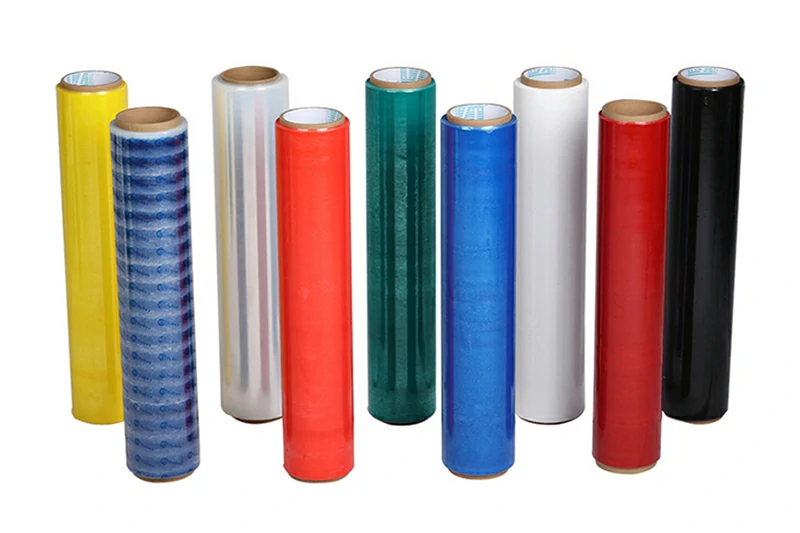
Branding film is most valuable for companies whose pallets are seen repeatedly by the same audience: distributors picking up every week, retailers receiving deliveries, and trade-show stands where a wall of branded pallets does the marketing. For a company logo rather than a flat colour, the next step is printed film, covered in our article on custom printed hand stretch film.
4. Colour Coding in the Warehouse
Inside a warehouse, colour is a system rather than a decoration. Assigning one colour to each customer, route, shift or product line lets anyone read a pallet at a glance, without stopping to read a label. Common assignments include:
- Customer — one colour per buyer, so mixed outbound docks stay sorted.
- Route or region — cuts mis-loading when several trucks leave at once.
- Shift or date — makes ageing stock and recall batches easy to spot.
- Status — one colour for quality-held, one for released to ship.
The same logic extends to industrial packaging where loads move between departments, and it is one of the ways colour reduces handling errors in our industrial packaging solutions.
Colour also speeds up sorting at busy packing benches, and the wider retail workflow is described in our guide to stretch film for e-commerce and retail.
5. Colour Options and Specifications
Coloured stretch wrap film is made to the same thickness and width bands as clear film, so a colour change should not force a specification change. The common options are below.
| Option | Typical use | Notes |
|---|---|---|
| Black | Concealment and security | Fully opaque; hides contents and branding |
| Red, blue, green, yellow | Brand colour, colour coding | Solid pigment; keeps standard stretch |
| White | Clean labels, light loads | Low opacity; mostly decorative |
| Custom colour | Brand match | Colour matched to a sample before production |
Width, micron and core are chosen independently of colour, and the ranges we hold across the line are listed on our colored film product page.
The same colours are available on narrow rolls for parcels and part loads, and those formats are covered in our guide to handy and mini stretch wrap.
6. How Colour Affects Performance
Colour is a pigment, not a coating, so it changes the film only slightly. A well-made coloured film keeps the elongation and cling of clear film, but heavy pigmentation can reduce clarity and, in thin gauges, marginally reduce puncture resistance. The practical rule is to keep coloured film within the same thickness band you would use in clear film rather than going thinner to save cost.
Two further points matter in the field. First, black film shows stretched white bands more clearly when over-stretched, which is actually useful feedback for the operator. Second, coloured film should be checked for lot-to-lot colour consistency if it carries a brand, since a pallet of mismatched reds looks worse than no branding at all. The film behaviour itself follows the same rules as clear film, which is why our hand stretch film guide applies to both.
Whichever colour you choose, the way the film is applied decides the result, and the choice between manual and powered wrapping is compared in our article on hand stretch film vs machine stretch film.
Buying coloured film in volume is where the unit price is actually decided, and the terms that matter are set out in our guide to hand stretch film wholesale.
Get a Free Quote from ZT Packaging
Tell us whether you need concealment, brand colour or colour coding, and send a colour reference if you have one. We cast black and coloured film in Dongguan on the same lines as our clear film, and we can match a brand colour before production. See the full range alongside the parent hand stretch film line.
Email zt@dgztpacking.com or call +86-0769-87897718.
Frequently Asked Questions
What is black stretch wrap used for?
Black stretch wrap is used to conceal and protect a load. Because it is opaque, it hides the contents of a pallet from view, which discourages theft, protects product details and makes any break in the wrap obvious.
Is coloured stretch film as strong as clear film?
Yes, when it is made by adding pigment to the same resin. Good coloured film keeps the stretch and cling of clear film. Very heavy pigment in very thin gauges can slightly reduce puncture resistance, so keep the thickness band the same as clear film.
Can I get a custom brand colour?
Yes. A custom colour is matched to a physical or digital sample before production, then cast in the same way as standard colours. Colour consistency is checked lot to lot when the film carries a brand.
Which is better for security, black or coloured film?
Black is better for concealment, because it is fully opaque. Colours are better for identification and branding, because they are meant to be seen. Many warehouses use both: black on high-value loads, colour for routing.
Do coloured rolls fit standard dispensers?
Yes. Coloured and black rolls are wound on the same 50 mm and 76 mm cores as clear film, so any dispenser that fits the standard core will handle them; the choices are compared in our guide to choosing a stretch film dispenser.