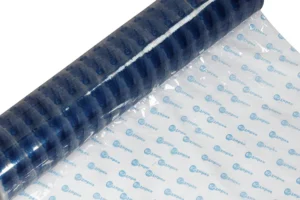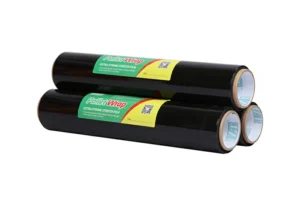
Hand stretch film thickness is the specification that decides whether a pallet arrives intact — and it is also the one buyers most often get wrong. Order too thin and the film punctures at the pallet corner; order too thick and you pay for polymer that never earns its cost back.
This guide covers hand film only: the 12–23 micron band that an operator can tension comfortably without a machine. It explains how micron and gauge relate, how load weight and edge sharpness shift the answer, and how to test a roll before you commit to a container. Every figure comes from our cast lines in Dongguan, where ZT Packaging controls thickness tolerance within ±5% on 20 in-house lines.
Contents
- 1. What Do Micron and Gauge Mean?
- 2. Why Hand Stretch Film Thickness Is the Spec Buyers Get Wrong Most Often
- 3. The Three Thickness Bands for Hand Film
- 4. Micron to Gauge Conversion Table
- 5. How Load Weight Changes the Answer
- 6. How Edge Sharpness and Surface Decide the Answer
- 7. How Pallet Size and Wrapping Method Change the Choice
- 8. Thickness and Film Economy: Meters per Kilogram
- 9. How to Test Whether a Roll Is Too Thin
- 10. Common Thickness Mistakes Buyers Make
- 11. A Quick Selection Checklist
- 12. Frequently Asked Questions
- 13. Get a Free Quote from ZT Packaging
1. What Do Micron and Gauge Mean?
Micron (μm) and gauge are two ways of writing the same thing: the thickness of the film. One micron is one thousandth of a millimetre. Gauge is the older unit still common in North America, and one gauge equals 0.254 micron, so the gauge figure is roughly four times the micron figure. A film sold as 80 gauge is therefore about 20 micron.
Both numbers describe the film before it is stretched. Once an operator pulls it around a pallet the film thins further, so the thickness on the carton is the starting point rather than the wrap force on the load. The full manual range, including width, core and colour options, sits alongside thickness in our complete guide to hand stretch film.
2. Why Hand Stretch Film Thickness Is the Spec Buyers Get Wrong Most Often
Thickness is the only specification that moves both sides of the cost equation at once. Thinner film gives more metres per kilogram, so the same weight of film covers more pallets. Thicker film resists punctures and tears, so fewer pallets arrive damaged. Buyers who optimise only the purchase price usually meet the difference later, in claims and re-wraps.
A film that fails on a sharp load does not fail quietly. A break stops the packing line, and a punctured wrap lets cartons shift in transit, which lands as a customer complaint rather than a film problem. The parameter ranges we hold on every roll — thickness, width, elongation and core — are listed on the hand stretch film product page.
3. The Three Thickness Bands for Hand Film
Three bands cover almost every manual wrapping job, and they map to load weight rather than to industry.
- 15–17 micron (60–70 gauge) — light cartons, small parcels and short-term storage. Thin, economical and easy to tension by hand.
- 17–23 micron (70–90 gauge) — the everyday working range for mixed pallets of cartons, bags and boxed goods.
- 23 micron and above (90 gauge and up) — heavy, sharp-edged or export loads where puncture resistance matters more than film economy.
Small-format work follows the same logic. Handled mini rolls, used on envelopes and parcels rather than pallets, are normally supplied in the lightest band so the operator can wrap quickly; the format is explained in our guide on handy and mini stretch wrap.
4. Micron to Gauge Conversion Table
Use the table below to translate between the units and match a thickness to a typical load.
| Micron (μm) | Gauge | Typical hand-film use |
|---|---|---|
| 12 | ≈48 | Very light cartons and short-term storage |
| 15 | ≈60 | Light parcels and small mixed loads |
| 17 | ≈70 | General light-to-medium pallet wrapping |
| 20 | ≈80 | The everyday standard for mixed pallets |
| 23 | ≈90 | Heavy, sharp-edged and export loads |
| 25–30 | ≈100–120 | Extra puncture resistance on rough surfaces |
Two cautions when reading any conversion chart. First, gauge values are rounded in trade use and suppliers differ by a gauge or two on the same micron figure. Second, resin density matters: a metallocene film and a standard film of identical thickness can behave differently under load. Comparing micron, and asking the supplier to state the thickness tolerance, is more reliable than comparing gauge labels.
5. How Load Weight Changes the Answer
Load weight sets the floor for hand stretch film thickness. Light pallets under about 300 kg hold well with 15–17 micron film, because the wrap only has to keep the stack closed. Loads above roughly 800 kg need the extra puncture resistance of 23 micron and up, since the film carries more force at the corners and the base turns.
Parcel operations rarely reach those weights at all. Fulfilment centres wrapping individual cartons and half pallets usually run the lightest hand film, and those packing-station workflows are described in our article on stretch film for e-commerce and retail.
6. How Edge Sharpness and Surface Decide the Answer
Edge sharpness catches buyers out more often than weight does. A smooth, already-wrapped carton can take 15 micron film without trouble, while the same weight in steel brackets, machined parts or bare pallet corners will puncture 20 micron film on the first revolution.
Where sharp edges cannot be removed, the answer is one band thicker or a reinforced grade; the construction options are described on our reinforced stretch film page. Rough concrete, splintered wood and exposed strapping have the same effect as a sharp edge, so the load surface matters as much as the load weight.
7. How Pallet Size and Wrapping Method Change the Choice
Wrapping method changes the practical limit. A machine pre-stretches film far beyond what a hand can reach, so it can begin thinner on the roll and still arrive stronger on the pallet; that trade-off is worked through in our article on hand stretch film vs machine stretch film.
Manual technique matters just as much. An operator who overlaps layers by 30–50% at moderate tension holds a load with thinner film than one who pulls hard and unevenly, because steady tension beats heavy tension. The method itself is covered in our step-by-step guide on how to wrap a pallet by hand.
A dispenser supports thinner film for the same reason: it keeps tension even and stops the roll from snagging on its own edge. Where a dispenser is worth adding is assessed in our guide on choosing a stretch film dispenser.
Pallet size has a smaller but real effect. A 400 mm roll on a narrow pallet makes more revolutions per load, so a lighter film stays practical, while a 500 mm roll on a standard pallet covers more surface on every turn.
8. Thickness and Film Economy: Meters per Kilogram
Thickness drives film economy through metres, not millimetres. Film is sold by weight but consumed by length. Because thinner film has less mass per metre, a 15 micron roll carries noticeably more metres than a 23 micron roll of the same weight, and every metre covers the same pallet surface.
That relationship, not the price printed on the roll, is what moves cost per pallet. It also explains why machine film can be thicker on the roll yet cheaper in use: pre-stretch removes film before it ever reaches the load. How film price and delivered cost are built up is broken down in our guide on hand stretch film wholesale.
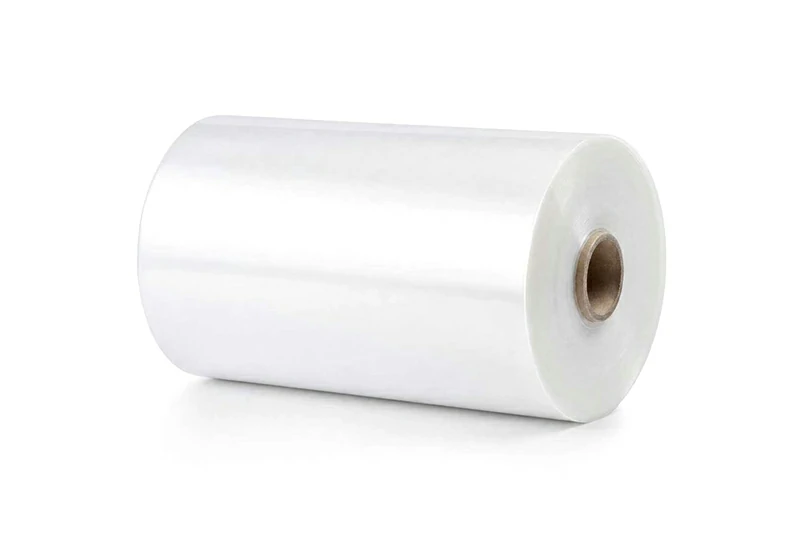
Where a line already runs powered equipment, the pre-stretch grades listed on the machine stretch film page push that saving further, and the roll lengths involved are why thickness decisions differ between the two formats.
9. How to Test Whether a Roll Is Too Thin
Before committing to a container, run one trial with your own loads. Wrap a full pallet in the candidate hand stretch film thickness, then put it through the handling it will meet in real shipping: a forklift lift, a short road leg and unloading with a pallet truck.
Then inspect four points — the pallet corners, the base turns, the top edge and anywhere a carton corner pushes outward. A wrap that still holds tension after 24 hours with no punctures is the right thickness; one that sags or tears is one step too thin. Buying from the mill makes this test cheap to repeat, because the specification can be adjusted without changing supplier, as explained in our article on sourcing hand stretch film from a China manufacturer.
10. Common Thickness Mistakes Buyers Make
- Choosing the thinnest film on price alone, then absorbing the claims and re-wraps.
- Standardising on one thickness for every load, from light cartons to sharp metal parts.
- Comparing gauge labels between suppliers without confirming the micron behind them.
- Ignoring storage, since heat and sunlight age the cling additive long before the film is used and the failure looks like a thickness problem.
Colour and printing do not change the thickness you need: a black film and a clear film of the same micron wrap alike. The practical uses of colour, from concealing high-value goods to colour-coding handling routes, are covered in our guide to black and colored stretch film uses.
Where branding has to travel with the pallet, printing can be applied to any thickness in the range, and the print widths and artwork requirements are listed in our article on custom printed hand stretch film.
11. A Quick Selection Checklist
- Start from stretch film load weight: under 300 kg runs 15–17 micron, 300–800 kg runs 17–23 micron, and above 800 kg runs 23 micron or more.
- Inspect the load edges. Any sharp or exposed edge moves you one band thicker.
- Match to the wrapping method, because hand tension and machine pre-stretch reach different practical minimums.
- Confirm the micron, not the gauge label, whenever you compare two suppliers.
- Trial one full pallet in the candidate thickness before ordering a full container.
If you would rather skip the guessing stage, send your load weight, pallet size and wrapping method, and our engineers will recommend a starting thickness and cut samples so the only variable in your test is the micron.
12. Frequently Asked Questions
What is the most common thickness for hand stretch film?
Around 20 micron (about 80 gauge) is the everyday choice for mixed pallet loads. Light cartons and parcels often use 15–17 micron, while heavy or sharp-edged loads move to 23 micron and above.
Is 20 micron the same as 80 gauge?
Close enough for ordering. One gauge equals 0.254 micron, so 20 micron converts to roughly 79 gauge, which the trade rounds to 80. Always confirm the micron figure rather than relying on the gauge label alone.
Is thicker stretch film always stronger?
Not automatically. Thickness improves puncture resistance, but wrap force depends on how much the film is stretched and how evenly it is applied. A well-tensioned 17 micron wrap can outperform a loose 23 micron one on the same pallet.
What hand stretch film thickness should I use for wrapping by hand?
For manual application, stay within 12–23 micron. Below that band the film is hard to tension without tearing, and above it the roll becomes heavy enough to tire an operator and reduce wrap consistency.
Does film thickness affect load stability?
It contributes, but it is not the only factor. Stability comes from wrap force, the number of layers and how well the film’s elastic memory holds the load. Thickness mainly determines how much abuse the wrap survives before it punctures.
13. Get a Free Quote from ZT Packaging
Getting hand stretch film thickness right is a short calculation once your load details are on the table. Send us your pallet weight, edge conditions and daily volume, and our packaging engineers will recommend the exact micron and quote it — within 24 hours. ZT Packaging has manufactured stretch film in Dongguan since 2001, with a 40,000 m² factory, 20 cast lines, an annual capacity above 60,000 tons and exports to more than 60 countries, all held to a thickness tolerance of ±5%. Email zt@dgztpacking.com or call +86-0769-87897718.