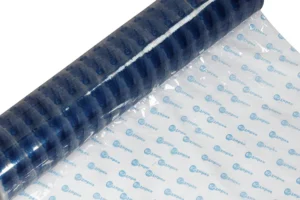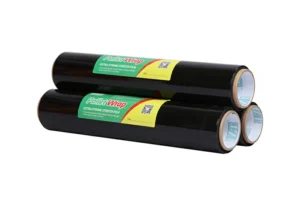
Hand stretch film is a thin, highly elastic LLDPE (linear low-density polyethylene, a strong and transparent plastic resin) film that an operator stretches and wraps around products or pallets by hand. It holds boxes, bundles and irregular loads together, protects them from dust and moisture, and keeps shipments stable from the packing bench to the delivery truck. Unlike machine stretch film, it needs no wrapping equipment — a roll and, ideally, a simple dispenser are enough to start packing.
This guide explains how manual stretch film works, which thickness and width fit which load, how it compares with machine film, and what wholesale buyers should check before ordering. Every specification below comes from ZT Packaging’s own casting lines in Dongguan, China, where we produce more than 60,000 tons of stretch film per year on 20 in-house cast lines.
Contents
- 1. What Is Hand Stretch Film?
- 2. Key Specifications at a Glance
- 3. How to Choose the Right Hand Stretch Film
- 4. Hand Stretch Film vs Machine Stretch Film
- 5. Dispensers: The Tool That Makes Manual Wrapping Work
- 6. How to Wrap a Pallet by Hand
- 7. Where Hand Stretch Film Is Used
- 8. Variants and Customization Options
- 9. Buying Hand Stretch Film Wholesale
- 10. Frequently Asked Questions
- 11. Get a Free Quote from ZT Packaging
1. What Is Hand Stretch Film?
Hand stretch film (also searched as manual stretch film or hand stretch wrap film) is stretch film designed to be applied by an operator rather than by a pallet-wrapping machine. The roll is light enough to carry — typically 2–5 kg of film on a 50 mm paper core — and the operator controls tension by pulling the film as they walk around the load. This makes it the everyday choice for low-to-medium volume packing stations, retail backrooms, moving services and e-commerce fulfillment.
1.1 How It Works: Cling, Stretch and Memory
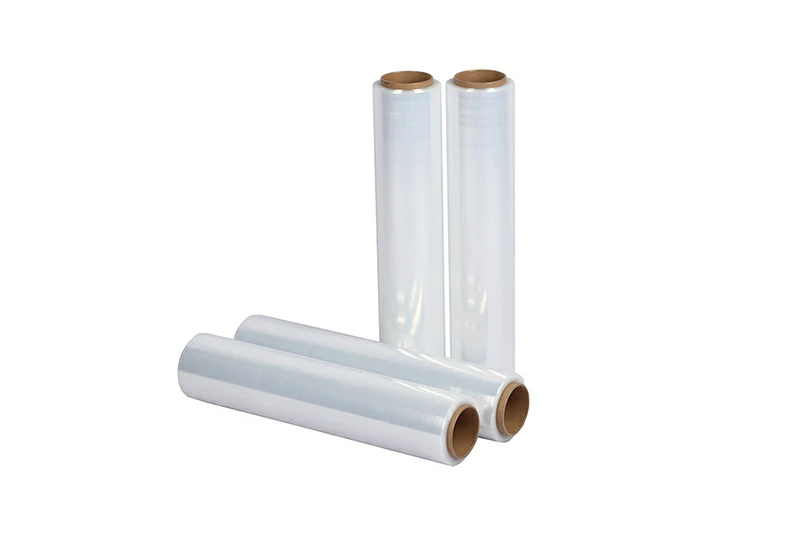
Hand stretch film does its job through three properties working together. First, cling: one side of the film is tacky, so each layer sticks to the next and the wrap closes on itself without tape or strapping. Second, stretch: quality hand film elongates up to 300% before breaking in laboratory tests on our casting lines, which means one metre of film can cover several metres of load surface and fewer metres are used per pallet. Third, elastic memory: once stretched around a load, the film tries to pull back, applying constant inward force that keeps boxes locked together during transport.
Because tension comes from the operator’s pull rather than a powered pre-stretch carriage, hand film is forgiving and easy to learn. If you want the full factory specification range in one place, our hand stretch film product page lists every parameter with quote options.
2. Key Specifications at a Glance
The table below summarises the standard hand stretch film range produced by ZT Packaging. Every value can be adjusted through OEM/ODM customisation, and film thickness tolerance is controlled within ±5% so each roll wraps the same from the first metre to the last.
| Specification | Standard Range |
|---|---|
| Material | 100% virgin LLDPE; metallocene grades available |
| Thickness | 12–23 micron (≈48–90 gauge) standard; custom 5–80 micron |
| Width | 400 mm and 500 mm standard; custom 100–1500 mm |
| Elongation | Up to 300% |
| Paper core | 50 mm inner diameter |
| Colors | Clear standard; black, colored and printed on request |
| Certifications | ISO 9001, REACH, RoHS, SGS, GRS |
| MOQ / Lead time | 1 pallet per specification; 15–20 days for custom production |
Thickness is the specification buyers ask about most, and it is also the one with the widest cost impact — too thin and loads fail in transit, too thick and you pay for film you never needed. The next section gives a fast way to narrow the choice.
3. How to Choose the Right Hand Stretch Film
3.1 Match Film Thickness to Load Weight
A simple three-band rule covers most manual wrapping jobs. Films of 15–17 micron (80 gauge or less) suit light cartons and short-term storage. Films of 17–23 micron (80–90 gauge) are the standard choice for everyday pallet wrapping of mixed loads. Above 23 micron (90 gauge and up), the extra puncture resistance protects heavy or irregular loads such as machinery parts and export shipments.
For a deeper walkthrough — including the micron-to-gauge conversion table and how load edge sharpness changes the requirement — see our dedicated guide on how to choose hand stretch film thickness.
3.2 Width, Roll Weight and Ergonomics
Standard hand film widths are 400 mm and 500 mm. A 500 mm roll covers more surface per revolution and wraps a standard pallet faster, while 400 mm rolls are lighter and suit narrow bundles or smaller operators. Roll weight matters more than buyers expect: a 2–5 kg roll is comfortable for a full shift, while heavier rolls cause fatigue and inconsistent tension, which shows up as loose pallets and film breaks.
If your team wraps hundreds of small parcels a day rather than pallets, the same casting lines also produce handy stretch film with an integrated handle, which removes the dispenser entirely.
3.3 Quick Decision Checklist
- Load weight and edge sharpness decide the micron — light and smooth loads start at 15 micron, heavy or sharp-edged loads at 23 micron and above.
- Pallet size decides the width — 500 mm for standard pallets, 400 mm for narrow or mixed loads.
- Storage and shipping route decide whether you need UV protection or extra puncture resistance.
- Wrap volume per day decides whether a dispenser is worth adding — above roughly ten pallets a day, it pays for itself.
- Brand visibility decides whether clear, colored or printed film fits your channel.
4. Hand Stretch Film vs Machine Stretch Film
Both films are LLDPE and both secure pallet loads, but they are engineered for different ends of the volume spectrum. Hand film optimises for light rolls and easy manual tension; machine film optimises for long meters per roll and consistent powered pre-stretch.
| Dimension | Hand Stretch Film | Machine Stretch Film |
|---|---|---|
| Applied by | Operator with dispenser | Stretch wrapping machine |
| Typical thickness | 12–23 micron | 15–30 micron, high pre-stretch grades |
| Roll weight | 2–5 kg | 10–20 kg and above |
| Paper core | 50 mm | 76 mm |
| Best for | Low-to-medium volume, irregular loads, field packing | High-volume pallet lines, consistent quality |
Not sure which side of the line your operation falls on? Our comparison of hand stretch film vs machine stretch film walks through the break-even volume at which a wrapping machine starts to pay off.
For the machine side of the comparison in detail, see the machine stretch film product page with its pre-stretch grades and jumbo roll options.
5. Dispensers: The Tool That Makes Manual Wrapping Work
A hand roll can technically be used bare, but an operator without a dispenser loses tension control, wastes film and tires quickly. A dispenser holds the roll on an adjustable axis, lets the film unwind smoothly, and keeps tension even as the operator walks the load. Over a full shift this is the difference between tight, repeatable pallets and loose ones that shift in transit.
Choosing between hand-held, adjustable and extended-handle models depends on roll width, roll weight and how many pallets your team wraps daily. Our guide on how to choose a stretch film dispenser compares the three types side by side.
The dispenser product page lists the models we supply to match our roll sizes, with options for both 400 mm and 500 mm rolls.
6. How to Wrap a Pallet by Hand
Manual wrapping is a skill, but a repeatable five-step method produces a stable pallet with consistent tension. The goal is a spiral: each revolution overlaps the previous one by 30–50%, with a few extra turns at the base and the top for reinforcement.
- Secure the film tail to a corner of the pallet base, keeping the roll facing outward so it unwinds freely as you walk.
- Wrap the base with two to three full revolutions, which anchors the load to the pallet itself.
- Walk around the load in a spiral, overlapping each layer by 30–50% and keeping steady, moderate tension.
- Reinforce the top with one or two extra revolutions, and fold the last film section under an earlier layer to lock the wrap.
- Tear the film and press the end flat against the load — a correctly tensioned wrap holds without tape.
Common mistakes at each step — and the wrap patterns professionals use for tall or unstable loads — are covered in our step-by-step article on how to wrap a pallet by hand.
7. Where Hand Stretch Film Is Used
Hand film is the default wherever loads are wrapped away from a fixed pallet line. That covers far more ground than warehousing alone, and the requirements shift noticeably by industry.
7.1 E-commerce, Retail and Moving
E-commerce fulfillment centers use hand film at packing stations to bundle multi-item orders, protect carton edges and secure goods onto half pallets. Moving and relocation teams rely on it to keep drawers closed and protect furniture surfaces. Retail chains use it in backrooms for replenishment pallets and promotional displays.
For a focused look at these workflows — including how mini rolls fit parcel work — see our article on stretch film for e-commerce and retail.
Retail chains that want the wrapped pallet itself to carry branding can start from the retail and e-commerce industry page, which covers color and printed film options for store replenishment.
7.2 Warehousing, Food and Industrial Use
In warehousing and logistics, hand film tops up machine-wrapped pallets, re-works damaged sections and secures odd-shaped items that never see a wrapper. Food and beverage distributors use it for mixed pallets and short-term produce protection, and industrial manufacturers wrap spare parts, tools and irregular fabrications that are too awkward to machine-wrap.
8. Variants and Customization Options
The same casting line that produces clear hand film produces its specialised variants. For wholesale buyers, knowing these options early avoids a second sourcing round later.
8.1 Handy and Mini Rolls
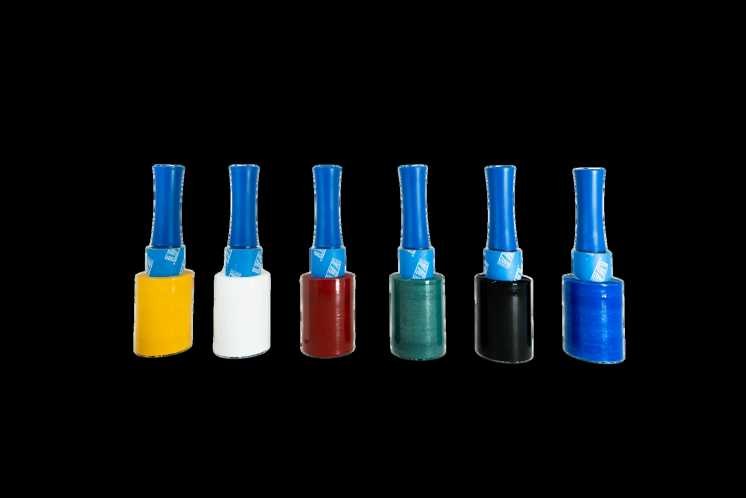
Handy film adds an integrated plastic handle to a short, narrow roll — typically 100–150 mm wide — so parcel and bundle wrapping needs no dispenser at all. Mini stretch wrap serves the same niche for e-commerce and office packing. Both are made from the same LLDPE as full-size hand film, just slit narrower and wound shorter.
Our article on handy and mini stretch wrap explains when a handled mini roll beats a full 500 mm roll, and when it does not.
8.2 Colored and Printed Film
Color is more than decoration on a warehouse floor. Black film conceals high-value contents and adds UV protection for outdoor storage, while a color-coding scheme — one color per customer, region or handling route — speeds up sorting and reduces mis-shipments. The colored stretch film page lists the standard color options.
Printed hand film goes one step further: your logo or handling instructions are repeated on every layer, turning each wrapped pallet into moving advertising that follows the shipment to your customer’s dock. Our article on custom printed hand stretch film covers print widths, ink colors and the artwork files we need.
Deciding between black and clear for a specific route or season is its own question — the pros and cons are set out in our guide to black and colored stretch film uses.
9. Buying Hand Stretch Film Wholesale
Wholesale terms for hand stretch film are straightforward when you buy from the casting mill. ZT Packaging’s MOQ starts at one pallet per specification, custom production runs 15–20 days after order confirmation, and every shipment leaves with REACH, RoHS and MSDS documentation for customs. Our buying guide on hand stretch film wholesale — MOQ, pricing and suppliers breaks down what moves the unit price and how to compare quotes.
Who you buy from matters as much as what you pay. Trading companies resell film they cannot test, while a manufacturer controls thickness tolerance at the casting line — ours holds ±5% — and can adjust width, gauge, color and printing without a second supplier. The reasons buyers consolidate on a factory source are laid out in our article on sourcing hand stretch film from a China manufacturer.
If you already know your loads, the fastest route is the hand stretch film product page — pick a specification, send your pallet details, and our engineers will confirm the right gauge within 24 hours.
10. Frequently Asked Questions
What is the difference between hand stretch film and regular stretch wrap?
“Stretch wrap” is the general term for the whole category. Hand stretch film is the subset designed for manual application: lighter rolls, a 50 mm core and a thickness range (12–23 micron) that a person can tension comfortably without a machine.
What thickness of hand stretch film should I use?
For light cartons start at 15–17 micron, for everyday mixed pallets use 17–23 micron, and for heavy or sharp-edged export loads move to 23 micron and above. Send us your load weight and pallet size and our engineers will recommend the exact gauge.
How much film is on a roll of hand stretch film?
Standard hand rolls carry roughly 2–5 kg of film on a 50 mm core in 400 mm or 500 mm width. Roll length varies with thickness — thinner film yields more meters per kilogram — so we quote roll length together with the gauge you choose.
Can hand stretch film be customized with my logo?
Yes. We print logos and handling instructions directly on the film, and also offer private-label packaging, custom core colors and custom widths for distributors and retail chains.
What is the MOQ for wholesale hand stretch film?
The MOQ is one pallet per specification for stock items, with 15–20 day lead times for custom production. Mixed-container loading of hand film, colored film and mini rolls in one shipment is supported for distributors.
Does hand stretch film stick to the product or only to itself?
Only to itself. The cling additive is applied to one side of the film during casting, so layers bond to each other but release cleanly from cartons, shrink-wrapped goods and furniture surfaces. This is why film can be removed after transport without leaving residue on the product.
How should hand stretch film be stored?
Store rolls in a cool, dry place away from direct sunlight, ideally below 30°C. Heat ages the cling additive and reduces stretch performance, and cold film should be allowed to return to room temperature before wrapping. Kept correctly, hand film holds its properties for around one year from production.
11. Get a Free Quote from ZT Packaging
ZT Packaging has manufactured stretch film in Dongguan since 2001, with a 40,000 m² factory, 20 in-house casting lines and an annual capacity above 60,000 tons. We export to more than 60 countries and support OEM/ODM customization on width, gauge, color and printing. Email zt@dgztpacking.com or call +86-0769-87897718 — send us your load weight, pallet size and monthly volume, and our packaging engineers will reply with a specification and quote within 24 hours.