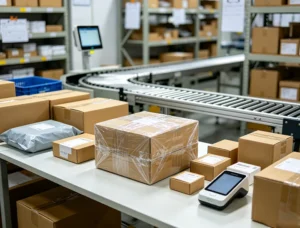
Stretch film for e-commerce is not the same product as stretch film for a pallet line, and treating the two as one is the most common way online sellers overspend on packaging. An e-commerce packing station handles many small, mixed, irregular orders a day, so the film has to be fast in the hand, cheap to apply per parcel and gentle on items that will be opened by a customer, not a forklift. A pallet roll, by contrast, is built for weight and distance.
This guide explains how to choose film for a packing bench or retail back room, how to set the bench up so it does not slow the pick-and-pack flow, and how to keep film cost per parcel low without losing protection. The numbers come from the mini and hand film we produce at ZT Packaging in Dongguan.
Contents
- 1. Why E-commerce Packing Stations Are Different
- 2. What Film Suits an Online Seller
- 3. Mini Rolls vs Hand Film: What to Buy
- 4. Setting Up a Packing Bench
- 5. Protecting Mixed and Irregular Orders
- 6. Reducing Film Cost per Parcel
- 7. Stretch Film in Retail Back Rooms
1. Why E-commerce Packing Stations Are Different
A pallet line optimises for load stability across a long trip. A packing station optimises for throughput across hundreds of small jobs. That flips almost every priority: the roll must be light enough to keep in one hand, narrow enough not to waste film on a small box, and fast enough that the operator does not put it down between orders. Film strength still matters, but it is measured against a carton or a bundle, not a tonne of goods.
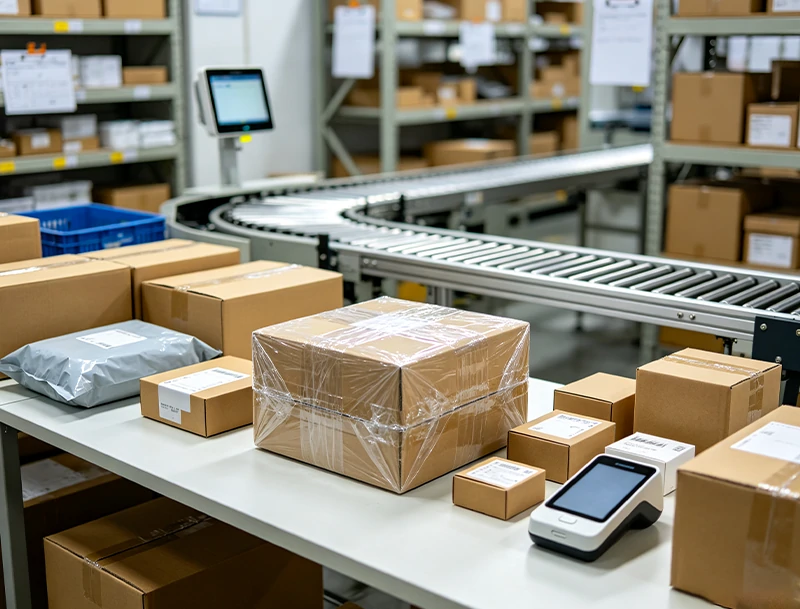
The second difference is who opens the package. An e-commerce wrap is removed by a customer, often with scissors, and a film that is too thick or too aggressive turns unboxing into a chore and can damage the product. A lighter film that holds the order together and pulls away cleanly is usually the better choice, and the thickness bands are explained in our guide on hand stretch film thickness.
2. What Film Suits an Online Seller
For most online sellers, the right product is a narrow hand film or a mini roll rather than a full 500 mm pallet roll. Three properties decide the fit:
- Width — 100 mm to 200 mm covers a carton in two or three turns with little waste; a 500 mm roll doubles over and wastes film on small boxes.
- Micron — 12–15 μm holds a typical order and stays easy to open; step up only for sharp or heavy items.
- Format — a handled mini roll or an extended-core roll keeps the film in one hand while the other holds the parcel.
Standard hand stretch film still has a place on the same site, for the part pallets and bulk orders that pass through the same dock, and the manual method for those is set out in our guide on how to wrap a pallet by hand.
Because the film is used by hand at the bench just as it is on a pallet, the complete method behind it is set out in our pillar guide on hand stretch film.
3. Mini Rolls vs Hand Film: What to Buy
The choice is not either-or; most stations use both. Mini stretch wrap handles single parcels and mixed items, while standard hand film handles the part pallet that the same order ships on. The way the two formats differ in width, micron and handle is compared in our article on handy and mini stretch wrap.
| Job at the bench | Best format | Typical width |
|---|---|---|
| Single parcel or bundle | Handled mini roll | 100–150 mm |
| Multi-item order | Mini roll or extended core | 120–200 mm |
| Part pallet | Standard hand film | 400–500 mm |
| Full pallet | Hand or machine film | 500 mm |
Buying both widths from one supplier keeps the core and handle matched, which matters more than it sounds: a handle made for a 50 mm core will not fit a 76 mm roll, and the mismatch is covered in our guide to choosing a stretch film dispenser.
4. Setting Up a Packing Bench
A packing bench should keep everything the operator needs within one reach, so the film never leaves the hand and the parcel never leaves the table. Four changes do most of the work:
- Mount the film on a bench holder or keep a handled roll in a fixed spot, so it is always in the same place.
- Keep two widths at the bench rather than one, so small and medium orders both get the right film.
- Place the roll at the edge the operator already uses, not across the table.
- Standardise one width and micron per bench, so tension does not change with every roll.
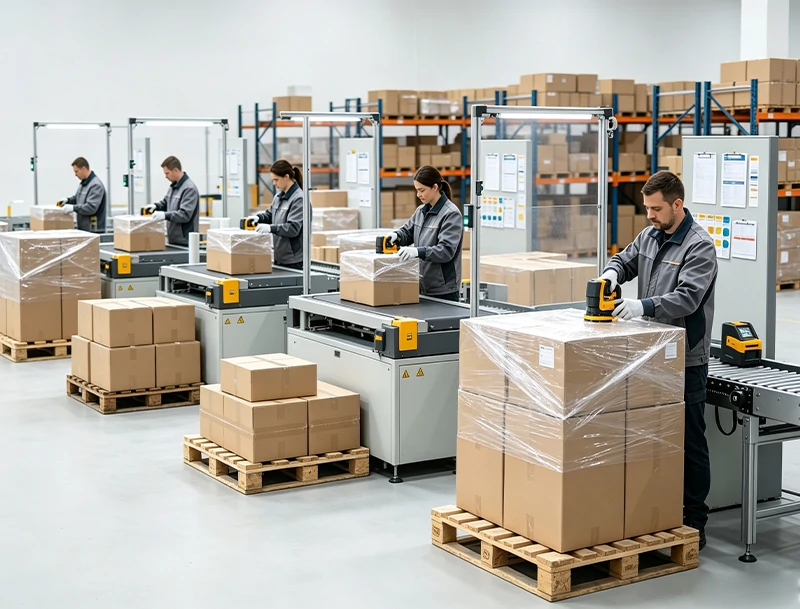
The same bench design that speeds packing also reduces film waste, and the wider warehouse arrangement it fits into is described in our warehouse packaging solutions.
5. Protecting Mixed and Irregular Orders
Online orders are rarely uniform, and the awkward ones are where film earns its keep. A single band of film around a multi-item order stops the contents from shifting and rattling inside the carton, reduces damage in transit and cuts returns. For loose items that would otherwise roll, a few wraps bundle them into one shape that a courier can handle.
Where items would be damaged by a tight wrap, film is still the safer choice over strapping or tape, because it holds with light, even pressure and releases cleanly. For fragile or boxed goods that need more than film, the dedicated protection options sit alongside our retail and e-commerce packaging solutions.
6. Reducing Film Cost per Parcel
At a packing bench, cost is measured per parcel, not per roll. The biggest lever is width: a 500 mm roll used on a 300 mm box wastes roughly 200 mm of doubled-over film on every turn, and that excess is the fastest way to inflate cost. Moving to a 120 mm or 150 mm roll for parcels usually lowers film cost per order more than any price negotiation.
The second lever is micron. Thicker film is not automatically better on a parcel; it is harder to open and often unnecessary. Matching thickness to the load is the same discipline that applies to pallets, and the terms that decide unit price at volume are set out in our guide to hand stretch film wholesale.
As volume grows, moving from a reseller to a factory changes the economics again, and how that works is explained in our article on sourcing hand stretch film from a China manufacturer.
7. Stretch Film in Retail Back Rooms
Retail back rooms sit between the packing bench and the pallet line. Staff there wrap roll cages, part pallets and mixed trolleys for a short trip to the shop floor, so they need film that is quick to apply and does not fight the operator. A coloured roll helps here for the same reason it helps in a warehouse: it identifies which load belongs to which department or shift, as explained in our guide to black and colored stretch film uses.
Where a retail group also ships to customers, the same film can carry a printed brand, and the artwork rules are covered in our article on custom printed hand stretch film.
Get a Free Quote from ZT Packaging
Tell us your typical parcel sizes, order volume and whether you also ship part pallets, and our packaging engineers will recommend the widths and micron for your benches. Everything we supply is cast in Dongguan, so mini rolls and pallet film arrive from one source, and the wider product family is shown in our hand stretch film range.
Email zt@dgztpacking.com or call +86-0769-87897718.
Frequently Asked Questions
What is the best stretch film for e-commerce packing?
A narrow hand film or handled mini roll, typically 100–200 mm wide and 12–15 micron thick. It covers a parcel in two or three turns with little waste and stays easy for the customer to open.
Can I use pallet stretch film for parcels?
You can, but a 400–500 mm pallet roll is too wide for small boxes and wastes film on every turn. A narrower roll costs less per parcel and is easier to control in one hand.
Does stretch film replace a box for shipping?
No. Stretch film secures and bundles items; it does not replace a carton for protection and labelling. It works best inside a carton or around items that are already boxed.
How do I stop film from slowing down the pack line?
Keep the roll in a fixed spot within one reach, use a handled or bench-mounted roll so it never leaves the hand, and standardise one width and micron per bench so operators are not adjusting tension constantly.
Is hand film or machine film better for retail?
For back-room and packing work, hand film is nearly always right, because the loads are small and irregular. Machine film suits a central distribution centre wrapping full pallets, and the two are compared in our article on hand stretch film vs machine stretch film.